Collections
People
Exhibitions
Favorites
Rights & Reproductions
Advanced Search
Image Not Available
for Untitled (view of houses)
Expand
Favorite
View PDF
Untitled (view of houses)
Previous
Next
Image Not Available
for Untitled (view of houses)
Untitled (view of houses)
Artist
Paul Caponigro
b. 1932
Date
n.d.
Medium
Vintage gelatin silver print
Dimensions
7 3/4 × 9 3/4 in. (19.7 × 24.8 cm)
Credit Line
Gift of the Yanover Family Trust
Object number
2019.18.2
Discover More
Image Not Available
for Untitled (building and street view)
Untitled (building and street view)
Paul Caponigro
n.d.
Image Not Available
for Untitled (rocks with reflection)
Untitled (rocks with reflection)
Paul Caponigro
n.d.
Image Not Available
for Untitled (chopped peppers)
Untitled (chopped peppers)
Paul Caponigro
n.d.
Image Not Available
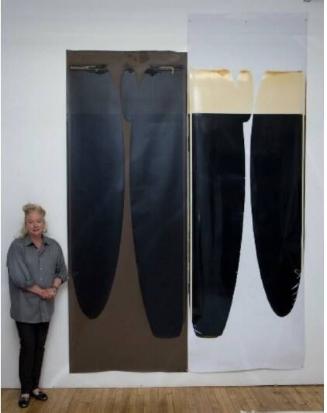
for Pull XL
Pull XL
Ellen Carey
2004
Blue Pull with Flare and Yellow Rollback
Ellen Carey
2002
Bobby
Christine Breslin
2000
Image Not Available
for Gaucho watches as horse rolls in dirt, Chile
Gaucho watches as horse rolls in dirt, Chile
Paul Almasy
ca. 1965
Image Not Available
for Study of mural outside office building, Venezuela,
Study of mural outside office building, Venezuela,
Paul Almasy
ca. 1960
Landscape with cacti in the Andes Mountains, Argentina
Paul Almasy
ca. 1960
Landscape with stream in the Andes Mountains, Argentina
Paul Almasy
ca. 1960

Land For The People: so far, Mexico is the Latin American country which has carried out the greatest land reform programs. Mexico's sweeping reforms are commemorated in the monument shown here, erected at Cuernavaca. The plaque reads: "Reform, Liberty, Justice and Law." By 1940 more than 14 million acres of cultivated land, out of a total of 30 million acres, had been distributed to landless farmers and their families, and further distributions have been put into effect since that time
Paul Almasy
ca. 1961
Image Not Available
for Elementary education is free and compulsory for children in all Latin American countries yet some 12 million children are still without schools and throughout the continent there are 60 million illiterate adults (40% of the adult population). In their drive to wipe out illiteracy, governments have been helped since 1956 by UNESCO's Major Project for the Extension of Primary Education in Latin America. Village women in Mexico, where UNESCO helped to set up a regional Fundamental Education Centre for Latin America, learn to read and write in an improvised classroom
Elementary education is free and compulsory for children in all Latin American countries yet some 12 million children are still without schools and throughout the continent there are 60 million illiterate adults (40% of the adult population). In their drive to wipe out illiteracy, governments have been helped since 1956 by UNESCO's Major Project for the Extension of Primary Education in Latin America. Village women in Mexico, where UNESCO helped to set up a regional Fundamental Education Centre for Latin America, learn to read and write in an improvised classroom
Paul Almasy
1961